Sunday, January 23, 2011

The Pacific Ocean / Der Pazifik

After visiting Mt Wilson Observatory, I planned on going to Yosemite National Park. As the night before, I went to a motel to sleep in (the night in my car was not comfortable at all). When I turned on the TV I saw a documentary on the coastal stripe and a big brush fire that had taken place a year earlier close to Big Sur. That actually was not too far away so I changed my plans and postponed Yosemite in favor of a day at the Pacific coast. That actually was a great idea. After a 2 hrs drive from Bakersfield (that´s where I stayed overnight) I arrived at the coast and kept driving northward on State Route 1 which is so beautiful that it has been declared National Scenic Byway. From all my drives that has been one that I will remember forever.
Before heading all the way up north to Monterey I had a cake and an icecream in Cambria in an internet cafe. That was the first time for a couple of days that I had access to the internet. Already had to fight some abstinence syndroms. How could I cope without the internet 15 years ago?
However, I then went along the shoreline and enjoyed the vista. There is nothing you can do except admiring the beauty of that place. It was, in lack of better words, awe-inspiring, miraculous and heavenly.
My first stop was at the elephant seal vista. At this neat place hundreds of elephant seals inhabit the shore. Most of them were just lying on the sand and taking a sun bath. But some of them were playing in the water - an interesting spectacle.
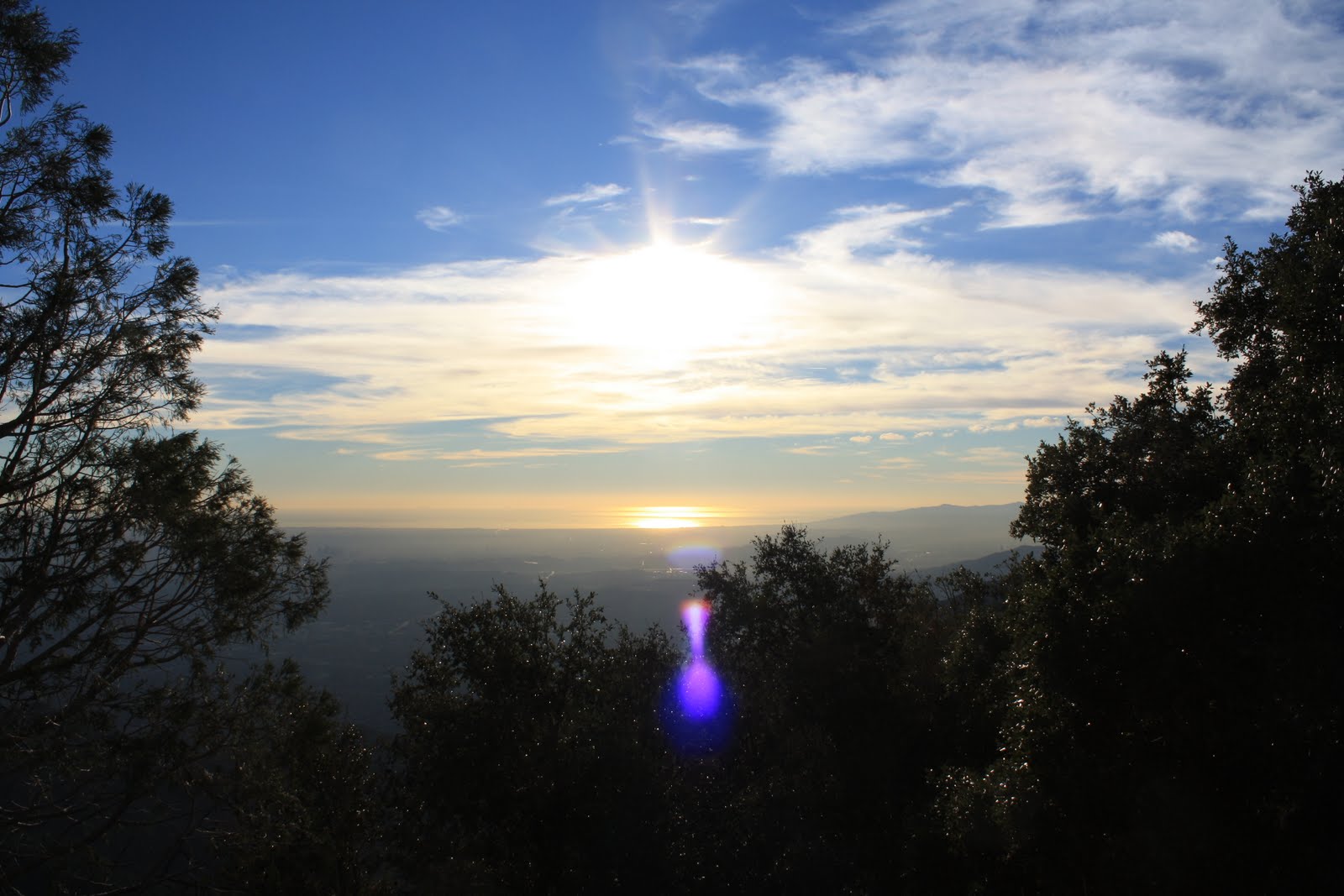
I cannot say, how often I stopped to enjoy the fabulous scenery. The sunset is still fresh in my mind. After spending about two more hours at the coast, with the moon shining from up above, I arrived at Monterey where I left the Pacific and went back eastbound.

- - - - - - - - - - - - - - - - - - - - - - - - - - - - - - - - - - - - - - - -

Nachdem ich Mt Wilson Observatory besucht hatte, wollte ich eigentlich zum Yosemite Nationalpark fahren. Wie schon die Nacht zuvor ging ich zum Übernachten in ein Motel um auszuschlafen (die Nacht in meinem Auto war absolut nicht bequem).
Als ich den Fernseher einschaltete sah ich einen Dokumentarfilm über den Küstenstreifen und das große Wildfeuer, welches dort ein Jahr vorher nahe Big Sur wütete. Das war tatsächlich nicht zu weit weg, daher änderte ich meine Pläne und verschob Yosemite zugunsten eines Tages an der Pazifikküste. Das war in der Tat eine prima Idee.
Nach zweistündiger Autofahrt von Bakersfield (dort übernachtete ich) erreichte ich die Küste und fuhr nordwärts auf der Staatsstraße 2, die so schön ist, daß sie als National Scenic Byway (ein Prädikat für landschaftlich besonders eindrucksvolle Strecken) deklariert wurde. Von all meinen Fahrten wird das eine derjenigen sein, an die ich mein Leben lang erinnern werde.
Bevor ich den ganzen Weg nach Monterey fuhr gönnte ich mir einen Kuchen und ein Eis in Cambria in einem Internetcafé. Das war das erste Mal seit mehreren Tagen, daß ich wieder Zugang zum Internet hatte, musste schon gegen Entzugserscheinungen ankämpfen. Wie konnte ich vor 15 Jahren nur ohne Internet auskommen?
Wie dem auch sei, ich fuhr entlang des Küstenstreifens und genoß die Aussicht. Man kann dort nichts machen außer die Schönheit des Platzes zu bewundern. Es war, in Ermangelung besserer Wörter, ehrfurchtgebietend, übernatürlich und himmlisch.
Als erstes stoppte ich beim Seelefanten-Aussichtspunkt. An dieser hübschen Stelle bewohnen hunderte Seelefanten die Küste. Die meisten von ihnen lagen nur im Sand und genehmigten sich ein Sonnenbad. Aber einige spielten im Wasser - ein interessantes Schauspiel.
Ich kann nicht sagen, wie oft ich anhielt um die fabelhafte Aussicht zu genießen. Der Sonnenuntergang ist mir noch in guter Erinnerung. Nachdem ich weitere zwei Stunden an der Küste verbrachte, mit dem Mond herunterscheinend, erreichte ich Monterey, wo ich den Pazifik verließ und wieder ostwärts fuhr.

- - - - - - - - - - - - - - - - - - - - - - - - - - - - - - - - - - - - - - - -


- - - - - - - - - - - - - - - - - - - - - - - - - - - - - - - - - - - - - - - -

Pictures from top to bottom:

(1) Elephant Seal Vista
(2) Shoreline with moon
(3) Sunset
(4) Shortly after sunset
(5) At night

- - - - - - - - - - - - - - - - - - - - - - - - - - - - - - - - - - - - - - - -

Bilder von oben nach unten:

(1) Seelefanten-Aussichtspunkt
(2) Küstenstreifen mit Mond
(3) Sonnenuntergang
(4) Kurz nach Sonnenuntergang
(5) Nachts

Saturday, January 15, 2011

Mt Wilson Observatory

A little north of Los Angeles, Mt Wilson Observatory can be found. A nice and long drive over the mountains in order not to go through L.A. led me to the observatory. As I later understood, that has been the right choice since the access road from L.A. was destroyed by a fire a year or so ago.
This time I chose to drive up the "German way" - a little faster, a little more having fun but of course not threatening me or anybody else. Driving on mountains is so fun when the weather is nice and you´re pretty much alone.
When I arrived at the observatory I was quite amazed by the amount of cars that were parked - obviously I wasn´t the only one on the road.
Half an hour before my arrival, a guided tour started. Somehow I was able to catch up and I believe all I missed were some biological facts on Mt Wilson.
Mt Wilson Observatory was founded in 1904 by the solar astronomer George Ellery Hale. He was famous for his urge to built the biggest telescopes on earth - and he built the biggest scope 3 times!
Originally, Mt Wilson was meant to be a solar facility but Hale built an 100" (2.5m) telescope which is named after John Hooker who provided funds for the mirror. Hale indeed was very successful in raising funds. Our first tour stop was a small museum which exhibits a model from the whole facility. Interestingly, even though L.A. is only a couple kilometers away, the seeing conditions are not too bad and in the case of an inversion the darkness and transparency of the sky is splendid according to our tour guide.
We then went on to one of the tower solar telescopes. The construction is quite interesting. Close to the ground, seeing conditions are not favorable. Hence, it makes sense to have the telescope resting on a tower that is tall enough to stand out of that ground layer. However, the higher the tower, the more prone it is to even slight wind gusts. Therefore, the truss structure is double. An inside one is surrounded by an outer one which does not touch the inner one. That way, the wind shakes the outside structure but the inside truss remains rock steady. What a wonderful idea!

The next stop was at a newly built interferometer testbed. Modern technical and scientific achievements make it possible to combine the light from several telescopes in order to obtain the resolution capability of a telescope that has a diameter that equals the distance between the telescopes.

What we all came for, of course, was the 100" (2.5m) Hooker telescope. The building is pretty dark inside and he have been advised not to touch anything since the electrics are very old. Actually, in contrast to most other telescopes, the Hooker telescope is run with direct current.

The telescope itself is impressive. Not only is it big but it also has a story to tell. Edwin Hubble, for instance, found out that there are plenty more galaxies outside our own (at that time it was unclear wether our own galaxy is the only one in the universe or not) and he measured the movements of galaxies (redshifts) which later on became an indication for the big bang theorie.
Furthermore, Harlow Shapley was able to show, that our sun is not in the center of our galaxy.

Most interesting to me, however, was Walter Baade´s story. Baade was a German astronom who conducted research in the states in the 1920. After a couple of years back in Europe he returned to the states - to Mt Wilson - in 1931 as a foreign astronom. He had plenty of chances to apply for a US citizenship but he did not. When World War II break out in 1939 he was considered a threat, of course. But his colleagues were able to convince the authorities that he was not evil so an extended house arrest was imposed on him. He was not allowed to move further away than 10 miles from his home in L.A. Mt Wilson was 9 miles away...
Furthermore, all his American workmates had to support the army and were not able to work at the observatory any more. Moreover, L.A.´s street lighting was shut down. How much luck can one have?

We had a great tour guide who was really committed and dedicated - attributes of all tour guides I had so far.
Mt Wilson is a very interesting and beautiful place. Anybody interested should invest a couple of hours to see the facilities.

- - - - - - - - - - - - - - - - - - - - - - - - - - - - - - - - - - - - - - - -

Etwas nördlich von Los Angeles befindet sich das Mt Wilson Observatory. Eine hübsche und lange Fahrt über die Berge, um L.A. zu umfahren, führte mich zur Sternwarte. Wie ich später erfuhr war das die richtige Wahl, da die Zugangsstrasse von L.A. vor etwa einem von einem Feuer zerstört wurde.
Diesmal habe ich mich dazu entschieden, bergauf nach "Deutscher Art" zu fahren - ein wenig schneller, etwas mehr Spaß habend aber natürlich nicht mich oder jemand anderes gefährend. Wenn das Wetter schön ist und man alleine auf der Straße ist, macht Berg fahren wirklich Spaß.
Als ich am Observatorium ankam war ich erstaunt über die Menge der Fahrzeuge die dort geparkt war - offensichtlich war ich doch nicht alleine auf der Straße.
Eine halbe Stunde vor meiner Ankunft begann eine geführte Tour. Irgendwie ist es mir gelungen, den Anschluß zu finden und ich glaube, alles was ich verpasst habe, waren ein paar biologische Fakten zu Mt Wilson.
Die Sternwarte auf dem Mt Wilson wurde 1904 vom Solarastronomen George Ellery Hale gegründet. Er war berühmt für seinen Drang, das größte Teleskop der Welt zu bauen - und er baute das weltgrößte Teleskop 3 mal!
Ursprünglich war Mt Wilson als reines Sonnenobservatorium geplant, aber Hale errichtete ein 100" (2,5m) Teleskop, welches nach John Hooker benannt ist, welcher die Geldmitel für den Hauptspiegel zur Verfügung stellte. Hale war übrigens sehr erfolgreich im Finden von Sponsoren. Unser erster Tourstop war in einem kleinen Museum in welchem ein Modell der ganzen Anlage ausgestellt ist. Interessanterweise sind die Seeingbedingungen nicht zu schlecht, obwohl Los Angeles nur ein paa Kilometer weg ist, und wenn eine Inversionsschicht vorhanden ist, dann sind Transparenz und Dunkelheit des Himmels laut unserem Tourführer hervorragend.
Wir gingen dann zu einem der Turmsonnenteleskope. Die Konstruktion ist ziemlich interessant. Nahe des Bodens ist das Seeing nicht vorteilhaft. Daher macht es Sinn, das Teleskop in einem Turm zu haben, der hoch genug ist, um über dieser Bodenschicht zu stehen. Wie dem auch sei, je höher der Turm ist, desto anfälliger wird er gegenüber selbst kleinen Windstößen. Daher ist die Trägerstruktur doppelt. Eine innere Struktur ist von einer äußeren umgeben, die die innere nicht berührt. Auf diese Weise schüttelt der Wind nur die äußere STruktur und die innere verbleibt felsenfest. Eine wundervolle Idee!

Der nächste Halt war bei einer neu errichteten Interferometer-Testanlage. Moderne technische und wissenschaftliche Errungenschaften machen es möglich, das Licht mehrerer Teleskop zu kombinieren um die Auflösungsfähigkeite eines Teleskopes zu erreichen, welches einen Durchmesser besitzt, daß dem Abstand der Teleskope zueinander gleich kommt.

Natürlich kamen wir aber all wegen des 100" (2,5m) Hooker-Teleskops. Das Gebäude ist innen zimelich dunkel und wir wurden angehalten, nichts zu berühren, da die Elektrik sehr alt ist. Tatsächlich wird das Hooker-Teleskop im Gegensatz zu den meisten anderen Teleskopen mit Gleichstrom betrieben.

Das Teleskop selbst ist eindrucksvoll. Es ist nicht nur groß, sondern hat auch eine Geschichte zu erzählen. Edwin Hubble beispielsweise hat hier herausgefunden, daß neben unserer eigegen Galaxie noch zahllose weitere existieren (zu dieser Zeit ar es noch unklar, ob unsere Galaxis die einzige Welteninsel im Universum darstellt oder nicht) und er maß die Bewegung der Galaxien (Rotverschiebungen) die später ein Indiz für die Urknalltheorie wurden. Weiterhin war Harlow Shapley in der Lage zu zeigen, daß unsere Sonne nicht im Zentrum unserer Galaxis steht.

Für mich am interessantesten jedoch war Walter Baade´s Geschichte, Baade war ein deutscher Astronom, der in den 1920er Jahren in den Vereinigten Staaten Forschung betrieben hat. Nach ein paar Jahren zurück in Europe kam er zurück nach Amerika - zu Mt Wilson - als ausländischer Astronom. Das war 1931. Er hatte viele Möglichkeiten eine US Bürgerschaft zu beantragen, aber er tat es nicht. Als 1939 der zweite Weltkrieg ausbrach wurde er natürlich als Bedrohung eingestuft aber seine Kollegen konnten die Behörden davon überzeugen, daß Baade nicht böse war und so wurde ihm ein erweiterter Hausarrest auferlegt. Es war ihm nicht erlaubt, sich weiter als 10 Meilen (16 km) von seinem Haus in L.A. fort zu bewegen. Mt Wilson war 9 Meilen weit weg...
Zusätzlich mussten alle seine amerikanische Arbeitskollegen die Armee unterstützen und waren nicht in der Lage, weiterhin am Observatorium zu arbeiten. Obendrein wurde die Straßenbeleuchtung von L.A. ausgemacht. Wie viel Glück kann man haben?

Wir hatten einen sehr verpflichteten und engagierten Tourführer - Eigenschaften aller Tourführer die ich bis dato hatte.
Mt Wilson ist ein sehr interessanter und schöner Ort. Jeder der interessiert ist, sollte ein paar Stunden investieren und die Anlage besuchen.

- - - - - - - - - - - - - - - - - - - - - - - - - - - - - - - - - - - - - - - -


- - - - - - - - - - - - - - - - - - - - - - - - - - - - - - - - - - - - - - - -

Pictures from top to bottom:

(1) 45m tall solar tower telescope
(2) Inside the solar telescope (at the ground of course)
(3) 100" Hooker telescope
(4) Interferometer testbed - please note the tube where the light goes through
(5) Panorama from Mt Wilson

- - - - - - - - - - - - - - - - - - - - - - - - - - - - - - - - - - - - - - - -

Bilder von oben nach unten:

(1) 45m hohes Turmsonnenteleskop
(2) Im Sonnenteleskop (auf Bodenniveau natürlich)
(3) 100" Hooker-Teleskop
(4) Interferometer-Testanlage - man beachte das Rohr durch welches das Licht durchgeht
(5) Panorama von Mt Wilson

Sunday, January 2, 2011

Big Bear City

Big Bear City is a small town in California at an elevation of a little over 2000 m. The drive from Mt Palomar to Big Bear City was spectacular. The winding roads were so different from what I was used to before and sometimes it felt like being back in the Alps.
Actually, all I wanted to see was the Big Bear Solar Observatory but since the drive took longer than expected, I stayed over night and visited the beautiful Big Bear Lake. Reflections of stars and an illuminated skiing area was really impressive.
However, I could not find the observatory even though I drove around the whole lake and had a map (on which I did not find the observatory). On the next day, I asked somebody to help me and he found the observatory on my map. It is located directly at the lake while I expected it to be on a nearby mountain top. I later understood that the conditions right at the lake are better at day than on a summit.
So, the next morning, after having a tasty breakfast in a neat French restaurant, I went by the observatory. As expected, I was not allowed to enter the facilities but I took some pictures from outside. The main instrument is a 1.7 m (clear aperture 1.6m) off-axis Gregorian with an effective focal length of around 83m. The primary mirror was polished at the Steward Observatory´s mirror lab.

Big Bear City is well worth a trip. It is surprisingly different from the rush in the San Diego, Pasadena and L.A. area and is pretty. Somehow, it reminds me of the Lincoln National Forest in New Mexico, where the National Solar Observatory (Sacramento Peak) is located.

- - - - - - - - - - - - - - - - - - - - - - - - - - - - - - - - - - - - - - - -

Big Bear City ist eine Kleinstadt in California welche auf einer Höhe von etwas über 2000 m liegt. Die Fahrt von Mt Palomar nach Big Bear City war spektakulär. Die kurvigen Straßen waren so verschieden von denen die ich gewohnt war zu befahren und gelegentlich fühlte ich mich als ob ich zurück in den Alpen wäre.
Eigentlich wollte ich nur das Big Bear Sonnenobservatorium besuchen aber da die Fahrt länger als erwartet dauerte, blieb ich über Nacht und stattete dem schönen Big Bear See einen Besuch ab. Die Reflektionen der Sterne und eines beleuchteten Skigebietes waren sehr eindrucksvoll.
Wie dem auch sei: Ich konnte das Observatorium nicht finden obwohl ich einmal komplett um den See herumgefahren bin und eine Karte (auf welcher ich das Observatorium nicht gefunden habe) dabei hatte. Am nächsten Tag bat ich jemanden um Hilfe und er fand die Sonnenwarte. Sie befindet sich direkt am See während ich sie auf einem nahegelegenen Gipfel erwartet hatte.
Wie ich später herausfand, sind die Bedingungen direkt am See tagsüber besser als auf einem Berggipfel.
Nachdem ich in einem niedlichen französischen Restaurant ein leckeres Frühstück eingenommen habe, fuhr ich zum Observatorium. Wie erwartet durfte ich die Anlage nicht betreten, daher schoss ich nur ein paar Bilder von außerhalb. Das Hauptinstrument ist ein 1,7 m (freie Öffnung 1,6 m) Off-Axis Gregorian Reflektor mit einer effektiven Brennweite von über 83 m. Der Hauptspiegel wurde im Steward Observatory Mirror Lab poliert.

Big Bear City ist eine Reise wert. Es ist überrraschend unterschiedlich von der Hektik in der San Diego, Pasadena und L.A. Gegend und ist sehr schön. Irgendwie erinnert es mich an den Lincoln National Forest in New Mexico, in welchem sich das Nationale Sonnenobservatorium (Sacramento Peak) befindet.

- - - - - - - - - - - - - - - - - - - - - - - - - - - - - - - - - - - - - - - -


- - - - - - - - - - - - - - - - - - - - - - - - - - - - - - - - - - - - - - - -
Pictures from top to bottom:

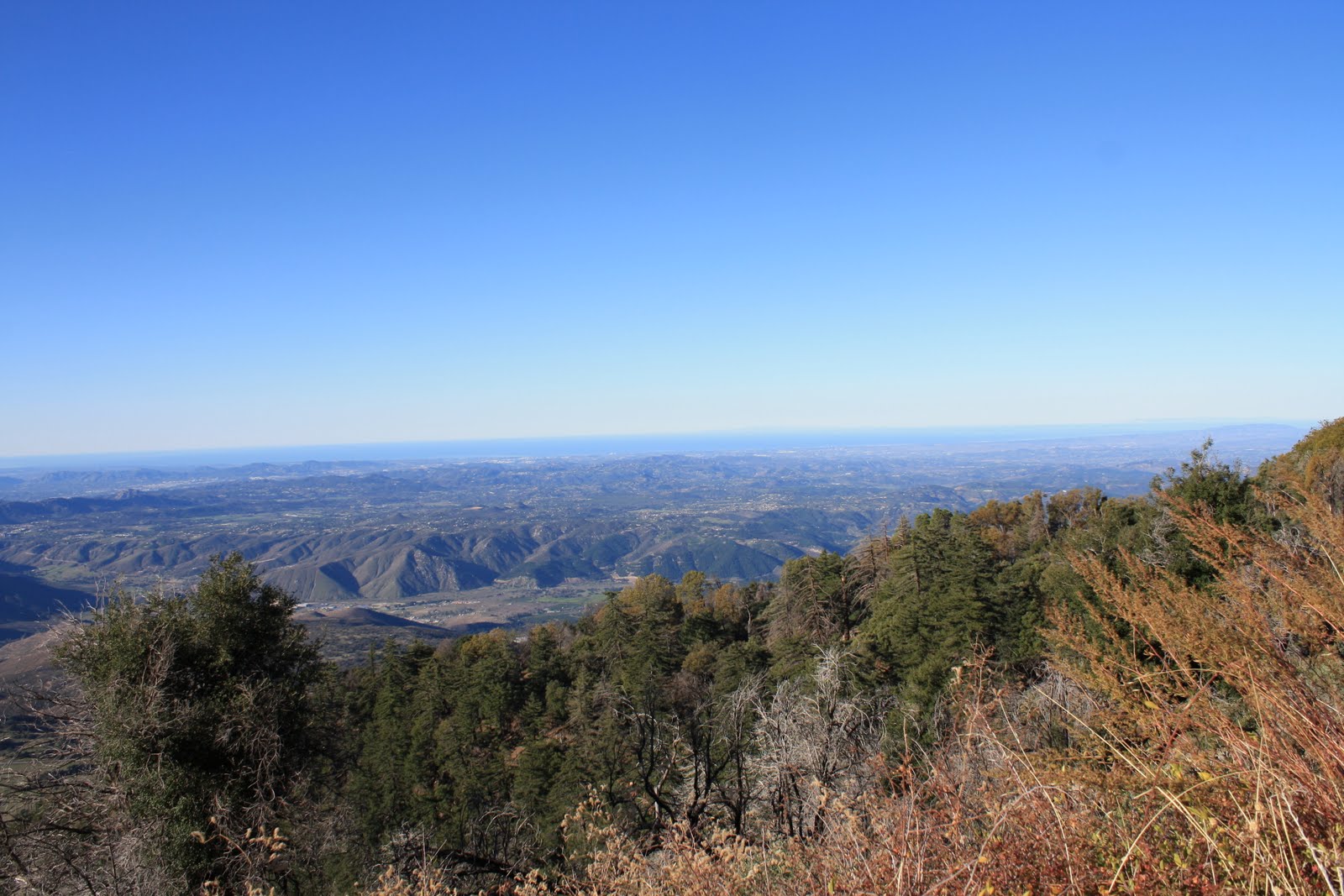
(1) What a panorama!
(2) The Big Bear Solar Observatory is located directly at the lake...
(3) ...and is obvious even from a distance
(4) Reflection of a nearby skiing area in the Big Bear Lake
(5) The lake looks so peaceful

- - - - - - - - - - - - - - - - - - - - - - - - - - - - - - - - - - - - - - - -

Bilder von oben nach unten:

(1) Was für ein Panorama!
(2) Das Big Bear Solar Observatory befindet sich direkt am See...
(3) ...und ist selbst voin einiger Entfernung auffällig
(4) Spiegelung eines nahegelegenen Skigebietes im Big Bear See
(5) Der See sieht so friedlich aus

Tuesday, December 28, 2010

Palomar Observatory / Palomar Observatorium

Only a two-hours drive from San Diego the world-famous Palomar Observatory is located. The 200" (5m) -Newtonian telescope, known as the Hale-Telescope, was the biggest telescope for almost three decades. Outstanding results have been achieved at the Palomar observatory. Walter Baade, for instance, was able to discern individual stars in the center of the andromeda galaxy. He was able to deduce that there were two different types of cepheids. Suddenly, the universe "became" twice as big as before. In 1966, Maarten Schmidt observed the quasi stellar object 3C273 spectroscopically and found signatures of what is now known as active galactic nuclei.
The smaller 48" (1.2m) Oschin-telescope (a Schmidt telescope) was used to expose deep wide-field images with the help of whose the Hale-telescope reached its full potential. Actually, the telescope is equipped with a 72" primary, but the Schmidt-plate stops it down to 48". It will be forever known for the Palomar Observatory Sky Surveys (POSS) which have been conducted from 1949 - 1958 and from 1985 - 2000. On the POSS-plates 50 million new galaxies and 1 billion new stars have been discovered. It is the basis for Google Sky.

Another object, that anybody knows, has been discovered with a rather small 18" telescope at Palomar Observatory: Comet Shoemaker-Levy 9, which struck Jupiter in 1994.

Unfortunately, I visited Mt Palomar a week after the seasonal guided tours have stopped, so I had to go on a self-guided tour, which is free. However, all you can do is go into a small exhibition hall and see the Hale telescope from a visitor´s gallery. The building where the 200"-telescope is inside is huge, some 42 meters in diameter and 41 meters tall. I had to use a fisheye-lens to get it in a single image. The telescope itself is very nice. It still is the biggest telescope resting on an equatorial mount.

When I was fighting with reflections in the gallery somebody from the daytime staff came over to me and allowed me to get inside and take pictures. Astronomers are friendly people!

All the other telescopes are closed to the public, what a pity.

Even though there is not too much to see at Palomar Observatory, I can still recommend it to anybody interested who is in the Pasadena area. Budget some 3 or 4 hours including the very scenic drive up the mountain. If you have some more time (I did not) you can visit the nearby Mount Palomar State Park. It is a beautiful area to be.

- - - - - - - - - - - - - - - - - - - - - - - - - - - - - - - - - - - - - - - -

Nur zwei Autostunden von San Diego entfernt liegt das weltberühmte Palomar Observatorium.
Das 200" (5m) Newtonteleskop, bekannt als Hale-Teleskop, war das weltgrößte Teleskop für beinahe 3 Jahrzehnte. Herausragende Resultate wurden am Palomar Observatorium erzielt. Walter Baade war beispielsweise in der Lage, individuelle Sterne im Zentrum der Andromedagalaxie auszumachen. Dadurch war es ihm möglich zu schlussfolgern, daß es zwei verschiedene Arten von Cepheiden gibt. Plötzlich "wurde" das Universum doppelt so groß wie vorher. 1966 beobachtete Maarten Schmidt den Quasar 3C273 spektroskopisch und fand Hinweise auf was man heute als Aktive Galaktische Kerne bezeichnet.
Das kleinere 48" (1,2m) Oschin-Teleskop (ein Schmidtteleskop) wurde benutzt um tiefe Weitfeldaufnahmen zu belichten mit deren Hilfe das Hale-Teleskop seine komplette Leistungsfähigkeit ausschöpfen konnte. Eigentlich ist das Teleskop mit einem 72"-Spiegel ausgestattet, aber die Schmidtplatte blendet es auf besagte 48" ab. Es wird für immer für die Palomar Observatory Sky Surveys (POSS) beannt sein, welche von 1949 - 1958 und von 1985 - 2000 durchgeführt wurden. Auf den POSS-Platten wurden 50 Millionen neue Galaxien und 1 Milliarde neue Sterne entdeckt. Es bildet die Basis für Google Sky.

Ein weiteres Objekt, welches jeder kennt, wurde mit einem eher kleinen 18" Teleskop am Palomar Observatorium entdeckt: Komet Shoemaker-Levy 9, welcher 1994 auf (eigentlich in) Jupiter stürzte.

Leider besuchte ich Mt Palomar eine Woche nachdem die saisonalen geführten Touren eingestellt wurden, daher musste ich auf die selbstgeführte Tour zurückreifen, die aber kostenlos ist. Wie dem auch sei, alles was man machen kann ist in eine kleine Ausstellungshalle zu gehen und das Hale-Teleskop von einer Galerie aus zu sehen. Das Gebäude in welchem das 200"-Teleskop untergebracht ist, ist riesig, etwa 42 Meter im Durchmesser und 41 Meter hoch. Ich musste das Fischaugenobjektiv verwenden um es komplett in ein Bild zu bekommen. Das Teleskop selbst ist sehr hübsch. Es ist nach wie vor das größte Teleskop, welches auf einer Äquatorialen Montierung ruht.

Als ich mit Reflektionen in der Gallerie kämpfte kam jemand der Tagesbelegschaft zu mir und erlaubte mir, von innen Bilder aufzunehmen. Astronomen sind freundliche Menschen!

Alle anderen Teleskope sind für die Öffentlichkeit leider geschlossen.

Auch wenn man nicht allzu viel am Palomar Observatorium sehen kann, kann ich es trotzdem jedem Interessierten empfehlen, der sich gerade in der Gegend um Pasadena befindet. Man sollte etwa 3 oder vier Stunden inklusive der sehr malerischen Fahrt auf den Berg mit einplanen. Wer etwas mehr Zeit hat (ich hatte sie nicht) kann den nahegelegenen Mount Palomar State Park besuchen. Es ist eine sehr schöne Region.

- - - - - - - - - - - - - - - - - - - - - - - - - - - - - - - - - - - - - - - -


- - - - - - - - - - - - - - - - - - - - - - - - - - - - - - - - - - - - - - - -
Pictures from top to bottom:

(1) The 200" Telescope dome from a distance...
(2) ...and a little closer
(3) 5m Hale telescope
(4) Exhibition hall
(5) Scenic panorama to the west

- - - - - - - - - - - - - - - - - - - - - - - - - - - - - - - - - - - - - - - -
Bilder von oben nach unten:

(1) Das 200" Teleskop aus einiger Entfernung...
(2) ...und aus der Nähe
(3) 5m Hale-Teleskop
(4) Ausstellungshalle
(5) Panoramaausblick gen Westen

Thursday, December 23, 2010

San Diego

On the first day of my road trip through the southwest I went to San Diego which is an eight hours drive from Tucson. In between you cross huge sand dunes and you can spend some time there to relax. Since I didn´t want to arrive too late in San Diego, I just made a couple of pictures and went on.
It was the first time for me to see the Pacific Ocean and it was well worth the trip even though I am not really into big cities. San Diego, however, is kind of nice. There are palm trees everywhere and the beach didn´t seem to be to overcrowded. So I parked my car close to the ocean and walked a kilometer or so along the beach and on a pier.
After that I had lunch at a nice Italian restaurant (well, couldn´t stand burgers and hot dogs any more) and went on to Mt Palomar where I stood over night. From there I had a splendid view on the coastal stripe with San Diego and a huge light dome from Los Angeles which is not too far away. Even though the night was very cold and extremely windy, I managed to get some sleep.

- - - - - - - - - - - - - - - - - - - - - - - - - - - - - - - - - - - - - - - -

Am ersten Tag meiner Autoreise durch den Südwesten ging es nach San Diego, welches etwa acht Autostunden von Tucson entfernt liegt. Zwischendrin fährt man durch Sanddünen und kann dort etwas Zeit verbringen und ausruhen. Da ich aber nicht zu spät in San Diego ankommen wollte, machte ich nur ein paar Bilder und fuhr weiter.
Es war das erste Mal, daß ich den Pazifik gesehen habe und die Fahrt war es absolut wert, auch wenn ich Großstädte nicht wirklich mag. San Diego ist jedoch irgendwie nett. Überall stehen Palmen und der Strand schien mir nicht zu überbevölkert. Daher parkte ich mein Auto nahe am Ozean und lief etwa einen Kilometer am Strand entlang und auf einem Pier.
Danach gönnte ich mir ein Mittagessen in einem netten italienischen Restaurant (nunja, ich konnte die Burger und Hot Dogs einfach nicht mehr sehen) und fuhr anschließend auf den Mt Palomar wo ich auch übernachtete. Von dort aus hatte ich eine großartige Sicht auf den Küstenstreifen mit San Diego und einer riesigen Lichtkuppel von Los Angeles, welches nicht zu weit entfernt liegt. Auch wenn die Nacht sehr kalt und extrem windig war habe ich es geschafft, etwas Schlaf zu bekommen.

- - - - - - - - - - - - - - - - - - - - - - - - - - - - - - - - - - - - - - - -


- - - - - - - - - - - - - - - - - - - - - - - - - - - - - - - - - - - - - - - -

Pictures from top to bottom:

(1) Algodones Sand dunes near Yuma
(2) Pacifik Ocean
(3) San Diego coast
(4) Not very shy seagull
(5) San Diego at night (1)
(6) San Diego at night (2)

- - - - - - - - - - - - - - - - - - - - - - - - - - - - - - - - - - - - - - - -

Bilder von oben nach unten:

(1) Algodones Sanddünen nahe Yuma
(2) Pazifischer Ozean
(3) Küste von an Diego
(4) Nicht sehr scheue Möwe
(5) San Diego bei Nacht (1)
(6) San Diego bei Nacht (2)

Tuesday, December 21, 2010

Fred Lawrence Whipple Observatory

In May I already had the opportunity to work at the Multi Mirror Telescope (MMT) which is located some 50 kilometers south of Tucson on Mt Hopkins. But I yet had haven´t seen the rest of the facility. Therefore, I attended a guided tour, amiably arranged by Dean Ketelsen.
We were a strong group of about 30 people who committed to spend the day participating a guided tour which concluded visits of VERITAS, some "smaller" optical reflectors in the 1m range and, of course, the 6.5m MMT. My first tour up the mountain with a university car was thrilling. Now, with a bus, it was formidable.

But our tour guide was really rousing and not only told us the hard facts but also some funny anecdotes. For example the VERITAS story.

Originally, those four 12m reflectors were supposed to be erected in a neat valley which leads on top of Mt Hopkins because it is shielded pretty well. However, since being a native land, this was not possible due to a God living in the valley according to the belief of those natives. After the assembly of the reflectors close to the visitor´s center one found out that this ominous God actually existed only after the plans for VERITAS have been made.

Our first stop, already a great part of the way up, was at the 10m optical gamma-ray telescope (if I recall correctly it is a test telescope for the 12m VERITAS reflectors). This one is set up close to a platform which we all could enter. When standing at a defined point (the f/1 focus) you can actually see your face upright spread over all the individual mirror segments. A phantastic idea and probably the part of the tour where the most pictures have been taken. But again our tour guide told us a funny (well, as an optician I should say rather "sad") story. Some of the lower mirror segments have been scratched horrifically. This kind of sabotage demoralized and terrified the staff, of course. Who could be such a jerk and destroy mirrors? Somebody then lied in ambush, trying to identify them. After a couple nights he found the delinquent: A black bear was fighting with his reflection...

After the VERITAS photosession we went on to the smaller telescopes on the mountain. Even though they are kind of old and don´t look too up to date, a lot of science is still going on. Lots of scientific issues do not require an 8m telescope, even smaller telescopes have their right to exist.

Finally, after enjoying the great panoramic view and after having a picnic, we went on to the very top of the mountain. Since the road is too steep, the bus is not allowed to drive up there. We were transported in a smaller car in several "loads".

Interestingly, opposite to the public tours given on Kitt Peak or Mt Palomar (there will be a blog entry pretty soon), we were allowed to enter the instrument room. Basically, that means we were standing right in front of the 6.5m monster. Currently, it is the 9th biggest optical telescope (counting the VLTs and the Kecks as one telescope). Our tourguide told us that the director of the MMT (a female argentinan scientist) does not like people being under the telescope. Well, I already had the chance to set my hands to it in May, so I was not too disappointed not to get any closer to the telescope.

When driving back to the visitor´s center we saw lots of animals. Occassionally I felt like being in a safari. Beside lots of deers and lizards we saw wild horses that didn´t seem to be distracted by the bus at all.

The tour, which takes around 8 hrs, was great and I can absolutely recommend it to anybody who is interested in scientific telescopes and does not have trouble looking down steep abysses.
Admission is only 7 $.

- - - - - - - - - - - - - - - - - - - - - - - - - - - - - - - - - - - - - - - -

Bereits im Mai hatte ich die Gelegenheit, am Multi Mirror Telescope (MMT), welches sich etwa 50km südlich von Tucson auf Mt Hopkins befindet, zu arbeiten. Allerdings hatte ich den Rest der Anlage noch nicht gesehen. Daher nahm ich an einer geführten Tour teil, an welcher mich Dean Ketelsen liebenswürdigerweise angemeldet hat.
Wir waren eine große Gruppe mit etwa 30 Teilnehmern, die sich verpflichtet haben, den Tag mit einer geführte Tour zu verbringen, die Besuche des VERITAS, einigen "kleineren" optischen Teleskopen der 1m-Klasse und natürlich dem 6.5m MMT beinhaltete. Meine erste Fahrt auf den Berg mit einem Fahrzeug der Universität war aufregend. Diesmal, mit einem Bus, respekteinflößend.
Aber unser Tourführer war wirklich mitreißend und erzählte uns neben den harten Fakten auch einige lustige Anekdoten. Zum Beispiel die VERITAS Geschichte.
Ursprünglich war geplant, die vier 12m Reflektoren in einem netten Tal, welches auf den Mt Hopkins führt, zu errichten, da sie dort sehr gut abgeschirmt gewesen wären. Allerdings war dies nicht möglich, da nach Glaube der Ureinwohner ein Gott in diesem Tal lebt. Nachdem die Reflektoren nahe des Besucherzentrums zusammengesetzt worden wurden, hat man herausgefunden, daß dieser ominöse Gott erst seit der Zeit existiert als die Pläne für VERITAS gemacht wurden.

Unser erster Stop, schon ein ganzes Stückchen den Berg hinauf, war am 10m optischen Gammastrahlenteleskop (wenn ich mich recht erinnere ist es ein Testteleskop für die 12m VERITAS Reflektoren). Dieses ist nahe einer Rampe aufgebaut welche man betreten kann. Wenn man an einem definierten Punkt (dem f/1 Fokus) steht, kann man sein Gesicht aufrecht über alle Spiegelsegmente verteilt sehen. Eine tolle Idee und vermutlich der Teil der Tour auf welchem die meisten Bilder gemacht wurden. Aber nochmals erzählte unser Tourführer eine lustige (naja, als Optiker sollte ich wohl eher sagen "traurige") Geschichte. Einige der unteren Spiegelsegmente wurden fürchterlich zerkratzt. Diese Sabotage demoralisierte und schockierte natürlich das Personal. Wer konnte nur ein solcher Trottel sein und die Spiegel zerstören? Irgendjemand legte sich dann auf die Lauer um ihn zu identifizieren. Nach ein paar Nächten wurde der Übeltäter gefunden: Ein Schwarzbär kämpfte mit seinem Spiegelbild...

Nach der VERITAS Photosession gingen wir zu den kleineren Teleskopen auf dem Berg. Auch wenn diese schon irgendwie alt und nicht mehr auf dem neuesten Stand erscheinen, wird noch viel Wissenschaft mit ihnen betrieben. Viele aktuelle Fragestellungen erfordrn keinen 8m-Spiegel, auch kleinere Teleskope haben ihre Daseinsberechtigung.

Nachdem wir die großartige Aussicht genossen und ein Picknick abgehalten haben, ging es schließlich auf den Berggipfel. Da die Straße zu steil ist, darf der Bus dort nicht hinauffahren. Wir wurden mit einem kleineren Fahrzeug in mehreren "Fuhren" transportiert.

Interessanterweise war es uns, im Gegensatz zu den öffentlichen Touren auf Kitt Peak oder Mt Palomar (es wird in Bälde einen Blogeintrag hierüber geben), gestattet, den Instrumentenraum zu betreten. Im Grunde bedeutet das, daß wir direkt vor dem 6.5m Ungetüm standen. Derzeit ist es das neuntgrößte optische Teleskop (wenn man die VLTs und die Kecks als ein Teleskop zählt). Der Tourführer sagte uns, daß die Direktorin des MMT (eine argentinische Wissenschaftlerin) es nicht mag, wenn sich Leute unter dem Teleskop befinden. Nun ja, da ich bereits im Mai die Möglichkeit hatte, Hand an es anzulegen, war ich nicht zu enttäuscht nicht näher an das Teleskop zu kommen.

Als wir zurück zum Besucherzentrum fuhren sahen wir viele Tiere. Gelegentlich fühlte ich mich wie in einer Safari. Neben vielen Rehen und Eidechsen sahen wir Wildpferde, die vom Bus überhaupt nicht abgelenkt schienen.

Die achtstündige Tour war großartig und ich kann jedem, der sich für wissenschaftliche Teleskope interessiert und kein Problem damit hat, steile Abgründe hinunterzuschauen, absolut empfehlen. Der Eintritt beträgt lediglich 7 $.

- - - - - - - - - - - - - - - - - - - - - - - - - - - - - - - - - - - - - - - -


- - - - - - - - - - - - - - - - - - - - - - - - - - - - - - - - - - - - - - - -

Pictures from top to bottom:

(1) Panoramic view from Mt Hopkins
(2) The 6.5m Multi Mirror Telescope
(3) Segmented self portrait
(4) First stop - this image depicts the size of the VERITAS 10m telescope

- - - - - - - - - - - - - - - - - - - - - - - - - - - - - - - - - - - - - - - -

Bilder von oben nach unten:

(1) Panorama von Mt Hopkins
(2) Das 6.5m Multi Mirror Teleskop
(3) Segmentiertes Selbstportrait
(4) Erster Halt - Das Bild zeigt gut die Größe des 10m VERITAS Teleskops

Wednesday, December 15, 2010

Back "Home" / Zurück "zu Hause"

Finally, another blog entry from me. I know, it took some while. The last three weeks of my entire stay in the states I used to travel around the southwest. I can promise: There are plenty of blog entries about to appear as soon as I will find the time to do so.
The flight back from Tucson over Atlanta to Zürich was a little bumpy every now and then but I was lucky enough to have two seats since no one was sitting next to me.
Back in Zürich the good old European weather (snow, rain, cold that is) welcomed me. For this time of year (i.e. beginning of December) the amount of snow is rather unusual. In the two weeks I have been back "home" I already had the opportunity to see the sun for two hours in a row, saw the moon twice and even Venus and Orion could be seen once. Woo hoo!
Some of you might have recognized the quotes around the word home. I am facing a difficult decision. Where will I live and work in the future, where actually IS home? Is it where you grew up, is it where you have good working conditions, is it where you have good friends or is it where you can pursue your hobby? Questions upon questions. The next weeks will be tough! In beginning of January I will have the defense of my master´s thesis and then I will have to find me a job that somehow is able to fulfill me and to pay my checks.
I am about to have plenty of sleepless nights...

- - - - - - - - - - - - - - - - - - - - - - - - - - - - - - - - - - - - - - - -

Endlich wieder ein Blogeintrag von mir. Ich weiß, es hat eine Weile gedauert. Die letzten drei Wochen meines Amerikaaufenthaltes habe ich genutzt um den Südwesten zu bereisen. Ich kann schon jetzt versprechen: Es werden noch viele Blogeinträge erscheinen sobald ich etwas Zeit gefunden habe, mich darum zu kümmern.
Der Flug zurück von Tucson über Atlanta nach Zürich war ab und zu ein wenig holprig aber ich hatte das Glück, zwei Sitze zu haben da ich keinen Sitznachbar hatte. Zurück in Zürich begrüßte mich das gute alte europäische Wetter (Schnee, Regen, Kälte). Die Schneemengen sind für diese Jahreszeit (Anfang Dezember) ziemlich ungewöhnlich. In den beiden Wochen die ich mittlerweile zurück "zu Hause" bin, hatte ich schon die Gelegenheit die Sonne für zwei Stunden am Stück zu sehen, den Mond habe ich schon zweimal gesehen und sogar Venus und den Orion konnte ich einmal erblicken. Wuhuu!
Manche unter Ihnen haben sicher die Anführungsstriche um "zu Hause" bemerkt. Ich muss eine schwere Entscheidung treffen. Wo werde ich zukünftig leben und arbeiten, wo genau IST "zu Hause"? Ist es wo man aufgewachsen ist, ist es wo man gute Arbeitsbedingungen vorfindet, ist es wo man gute Freunde hat oder ist es wo man seinem Hobby nachgehen kann? Fragen über Fragen. Die nächsten Wochen werden anstrengend werden. Anfang Januar werde ich die Verteidigung für meine Master´s Thesis haben und dann muss ich eine Arbeitsstelle finden, die irgendwie fähig ist, mich zu erfüllen und meine Rechnungen zu bezahlen.
Ich sehe vielen schlaflosen Nächten ins Auge...